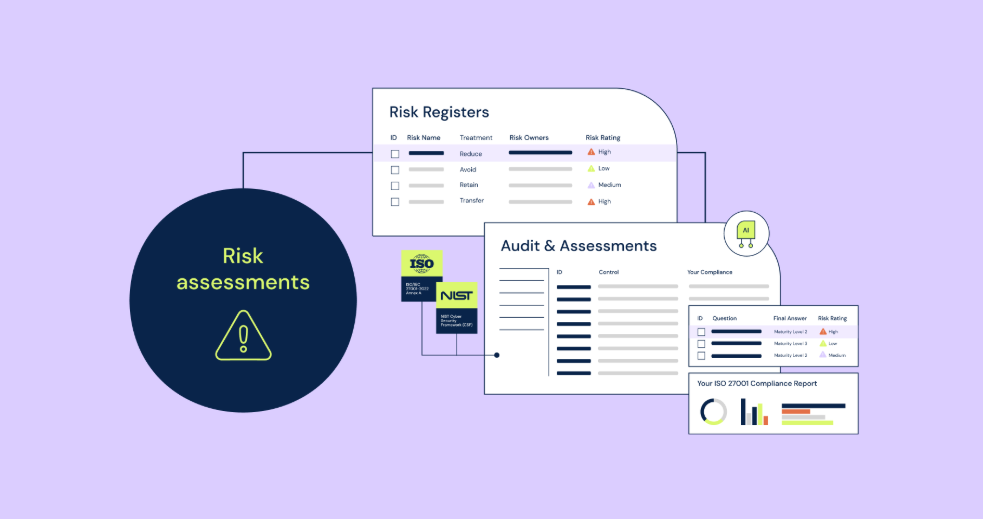
Digital risk assessment confronts noisy, dynamic signals that resist immediate interpretation. Ownership is fragmented across teams and vendors, slowing decision cycles. Threats evolve quickly, complicating prioritization and strategy. Governance gaps hinder consistent action, while balancing speed with patching and compliance remains elusive. The challenge is to turn data deluge into actionable insight through repeatable processes, clear roles, and aligned risk appetite—yet the path to resilience remains uncertain, inviting closer scrutiny of practical frameworks and governance.
What Makes Digital Risk Assessment So Hard
Digital risk assessment is challenging because risk signals are noisy, dynamic, and context-dependent.
The field grapples with unclear ownership, where responsibility fragments across teams, tools, and vendors.
Evolving threats complicate prioritization, forcing strategic restraint amid rapid changes.
A concise framework is required to align objectives, allocate resources, and sustain resilience without stifling initiative or freedom to adapt.
Data Deluge vs. Signal: Turning Noise Into Insight
Data deluge challenges analysts by flooding teams with signals of varying quality, making it difficult to distinguish actionable insight from noise. In this environment, disciplined data management and robust signal processing become strategic capabilities, enabling targeted insight extraction.
Aligning Risk With Compliance, Governance, and Patching
Aligning risk with compliance, governance, and patching requires a holistic approach that links threat assessment to organizational controls. The analysis emphasizes alignment compliance as a foundation, integrating governance patching with a security metrics baseline to quantify resilience. A clear risk appetite framework guides prioritization, ensuring controls remain proportional and adaptive while fostering freedom to innovate within compliant boundaries.
Turning Chaos Into Repeatable Process With Frameworks and Roles
Turning chaos into repeatable practice requires establishing clear frameworks and defined roles that translate scattered insights into consistent actions. The approach emphasizes risk taxonomy, data governance, and stakeholder alignment to guide decisions. Automation tooling supports risk scoring and incident prioritization, turning vigilance into measurable outputs. A disciplined structure yields freedom: predictable responses, faster remediation, and resilient risk management across diverse teams.
Frequently Asked Questions
How Can Small Teams Bootstrap Digital Risk Programs Quickly?
A small team can bootstrap quickly by prioritizing high-impact controls and using lightweight automation. It leans on playbooks, reusable templates, and cloud-native tooling, enabling bootstrapping quickly with small team automation while preserving strategic risk awareness and freedom.
What Metrics Prove ROI of Risk Assessment Efforts?
Could ROI metrics prove risk assessment worth it, or is value seen only in cost savings and long-term resilience? The metrics ROI focus, with cost savings and risk reduction, demonstrates strategic, risk-aware gains for freedom-seeking teams.
How Do Vendors Influence Risk Scoring and Transparency?
Vendors influence risk scoring and transparency by embedding methodologies with potential biases, causing an unrelated topic drift and irrelevant concept leakage; this risks misalignment between stated risk posture and actual controls, demanding independent validation, governance, and comprehensive auditing.
Can Risk Assessments Scale Across Multi-Cloud Environments?
One in four enterprises report mixed results when scaling governance across multi-cloud environments. Risk assessments can scale across multi-cloud environments, provided robust governance and monitoring exist. This supports scaling governance, multifactor risk controls, and strategic risk-aware decision making.
What Is the Role of Culture in Risk Management Adoption?
Culture adoption shapes risk governance by aligning behaviors with policy, fostering accountability, and sustaining controls; it enables proactive decision-making, elevating resilience. In a risk-aware, strategic frame, organizations pursue freedom through disciplined cultural integration and continuous improvement.
Conclusion
Digital risk assessment remains a moving target, where signals must be distilled from noise and decisions must travel through fragmented ownership. A strategic focus on governance, alignment with compliance, and disciplined data management transforms chaos into repeatable, measurable outcomes. By codifying roles, accelerators, and automation, organizations can close the loop between insight and action. Anachronism: while teams chase real-time alerts, the coffee-powered oracle of yesterday quietly reminds that consistency beats crunching chaos every time.