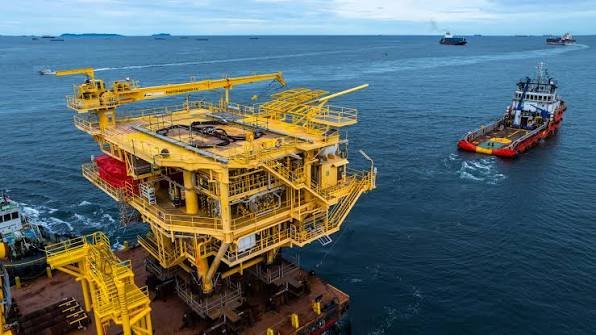
Far from shore, an offshore platform cannot pop out for supplies. Drilling mud, cement, fuel, fresh water, spare parts and food all have to arrive by sea, in almost any weather, on a schedule the operation depends on. That unglamorous but essential job belongs to the platform supply vessel, the workhorse that keeps remote installations running day after day.
Think of it as a delivery truck, a fuel tanker and a warehouse combined into one ship. Unlike a cargo vessel that makes occasional port calls, a supply vessel works in a constant loop: load at an onshore supply base, sail to the field, hold position beside a platform while cranes lift cargo across, then return for the next load. A single installation may need several visits a week, and a busy field with multiple rigs can keep a small fleet employed around the clock.
A Ship Built Around Its Cargo
The most obvious feature is the large, open deck aft of the superstructure. That flat working area carries containers, pipes, equipment skids and anything else a platform needs, lashed down against the motion of the sea. Below deck, the hull is divided into tanks for liquid cargo: diesel, potable water, drilling fluids, brine and dry bulk such as cement and barite, which are stored in silos and discharged through hoses and pipes.
Capacity is the commercial argument for the ship. Operators charter a vessel based on how much deck space it offers, how many cubic metres of liquid it can carry, and how efficiently it can load and discharge. A modern psv vessel is therefore designed from the cargo outward: tank arrangement, pumping systems and deck layout all shape the hull around them. Even the bridge is placed forward, high above the deck, so the crew can watch cargo operations behind them while keeping a clear view ahead.
SEE ALSO: How an Undergraduate Qualification Can Support Business Career Development
Holding Still in a Moving Sea
The cleverest part of the operation happens when the vessel arrives. A platform leg or a floating rig does not offer a harbour wall to tie up against, and anchoring in deep water near subsea equipment is not an option. Instead, the vessel uses dynamic positioning, known as DP, a computer-controlled system that combines GPS, wind sensors, gyrocompasses and motion references to drive thrusters that hold the ship on an exact spot.
With DP engaged, the vessel can sit a safe distance from the platform for hours while a crane swings loads between the two. The system constantly corrects for wind, waves and current, making tiny thrust adjustments many times a minute. Redundancy is built in: duplicate computers, sensors and thruster groups mean a single failure should not cause the ship to drift toward the installation. For crews, DP watchkeeping is one of the most demanding skills on board.
Life on the Supply Run
A typical rotation starts at a supply base in a port such as Aberdeen, Stavanger or Houston. Forklifts and cranes load the deck, often at night, while hoses fill the tanks below. Backloading matters just as much: the vessel rarely returns empty, carrying waste, empty containers and equipment coming ashore for repair. This two-way flow is why schedulers plan voyages carefully, matching deck space in both directions.
Weather sets the real timetable. Winter storms in the North Sea can delay sailings, close crane operations and force platforms to ration supplies, which is why installations keep buffer stocks and why supply vessels are built with strong seakeeping: a hull form and stabilisation that let them work safely in conditions that would stop smaller craft.
Why the Role Still Matters
Energy headlines focus on rigs and production platforms, but none of them function without logistics. Every meal eaten offshore, every metre drilled and every maintenance job completed starts with cargo that arrived on a supply vessel. As fields move into deeper water and harsher environments, the demands on these ships grow: more capacity, better positioning accuracy and lower fuel burn.
The platform supply vessel rarely makes the news, yet it is the connective tissue of offshore oil and gas. Understanding what it does, how it carries its mixed cargo and how it holds position beside a platform explains a large part of how the offshore industry actually works in practice, far beyond the shoreline.